
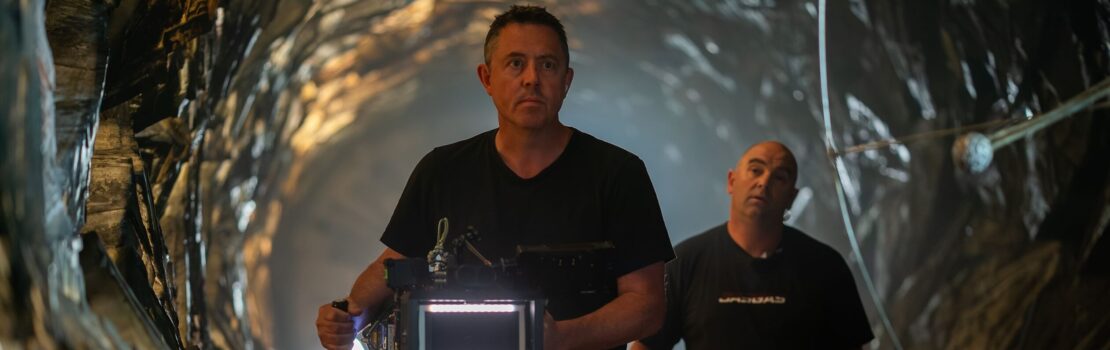
Few cinematographers working today have shaped the look of blockbuster cinema quite like Greig Fraser.
In this Greig Fraser interview with accessreel.com, the Oscar-winning cinematographer discusses Project Hail Mary, working with Ryan Gosling, and the technical challenges behind what he calls the most demanding film of his career.
From Rogue One: A Star Wars Story to Dune and The Batman, Fraser has helped define the visual language of modern franchise filmmaking. But with Project Hail Mary, he believes he’s pushed himself further than ever before.
“To date, it’s the proudest I’ve been of a film,” Fraser tells accessreel.com. “We worked so hard to do it. I expended so much nervous energy on certain problems – and when I watch it now, I forget about all that and just see this beautiful character experiencing his mate in space.”
“Project Hail Mary is the proudest I’ve ever been of a film.”
For a cinematographer whose resume includes some of the most visually influential blockbusters of the past decade, that’s a striking statement.
Project Hail Mary Review
A Buddy Film… in Deep Space
Fraser did not approach Project Hail Mary with a rigid visual blueprint.
“Normally you have an idea,” he explains. “But I try not to form a complete vision before speaking to the directors. If I see something too clearly in my head, it’s very hard for me to unpack it.”
Instead, after speaking with the directors, the tone crystallised – not as cold science fiction, but something closer to an 80s-style buddy film set against hard astrophysics and isolation in deep space.
“We didn’t want to get bogged down in the science,” Fraser says. “But the hard science in it is incredibly technical and very hard to shoot.”

Shooting a Ship in Two States
One of the film’s biggest challenges is something most audiences may never consciously notice.
The spacecraft operates in two orientations – horizontal and vertical – depending on whether it’s travelling or stationary.
“Every set occurs in two states,” Fraser explains. “Horizontally and vertically.”
That meant sets had to function structurally and visually in both positions. Lighting and camera planning had to work regardless of orientation.
“Sets aren’t built to just stand up on their end,” he says. “You’ve got to structure them so they work both vertically and horizontally. And you’ve got to pre-plan the lighting so it works in both states.”

“Every part of Hail Mary is a challenge – technically and emotionally.”
A Film Carried by Ryan Gosling
Much of Project Hail Mary unfolds through one central performance – Ryan Gosling appears in virtually every scene.
“It put a lot of pressure on Ryan,” Fraser says. “Normally you’ve got other actors to go to. But he was in every scene.”
In addition to the emotional weight of the story, Gosling underwent extensive physical preparation for zero-gravity sequences and wire work.
“If he hadn’t trained enough for a certain stunt yet, we might shift that scene to a few days later,” Fraser explains. “We had to be very alert to what was feasible at any point in time.”
The crew often pre-lit sets over weekends so they could pivot quickly when needed.
From Rogue One to Dune
With a career that includes some of the most memorable imagery in modern cinema, choosing a single standout moment is not easy.
“I could talk about sequences in every film I’ve done,” Fraser says.
He remains especially fond of his work as cinematographer on Rogue One: A Star Wars Story, including the now-iconic Darth Vader hallway sequence.
“I loved shooting it,” he says.
Another standout moment came during Dune: Part Two, particularly Paul Atreides’ sandworm-riding sequence.
“When I first saw that in the cinema, sitting next to Denis, I fist-bumped the air,” Fraser laughs. “Like a big kid – ‘Man, this is awesome.'”
For Fraser, those moments – when months of technical problem-solving finally translate into pure cinematic exhilaration – make the struggle worthwhile.
“It’s hard, man,” he says. “And that’s when the best sequences are the best – when it’s tricky and you figure it out.”
His Most Demanding Film Yet
Despite shaping the visual identity of major franchises, Fraser suggests Project Hail Mary demanded something uniquely intense.
“Every part of Hail Mary is a challenge,” he says. “Every part of it – technically and emotionally.”
And yet when the technical hurdles disappear and the story takes over, that is when he knows it is working.
“When I watch it now, I’m not thinking about the problems,” Fraser says. “I’m just watching this beautiful character experiencing his mate in space.”
And for a cinematographer who has already helped define the look of Rogue One, Dune, and The Batman, that is saying something.
Hear the full Greig Fraser interview below – hit play
Interview conducted by Darran Price for accessreel.com